Perched on the slopes of the Drino Valley in southern Albania, Gjirokastër is known as the “Stone City” for its distinctive stone architecture and slate roofs. Designated a UNESCO World Heritage Site in 2005 alongside Berat, the city is one of the best-preserved examples of an Ottoman-era town in the Balkans. Its imposing hilltop fortress, historic tower houses, and cobblestone streets offer a deep and authentic look into Albania’s cultural and architectural past.
Why Gjirokastër Deserves Your Time
Unlike Albania’s more developed coastal destinations, Gjirokastër remains rooted in everyday life. Families still live in centuries-old stone houses, the old bazaar continues to function as a commercial center, and traditional crafts are practiced in small workshops. While it is visually striking, the city’s appeal lies as much in its atmosphere and continuity as in its landmarks.
The contrast with Berat is often noted. Where Berat is defined by white facades and a riverside setting, Gjirokastër is darker and more fortress-like, built almost entirely of stone, with a castle that dominates both the skyline and the city’s identity.
Gjirokastër Castle
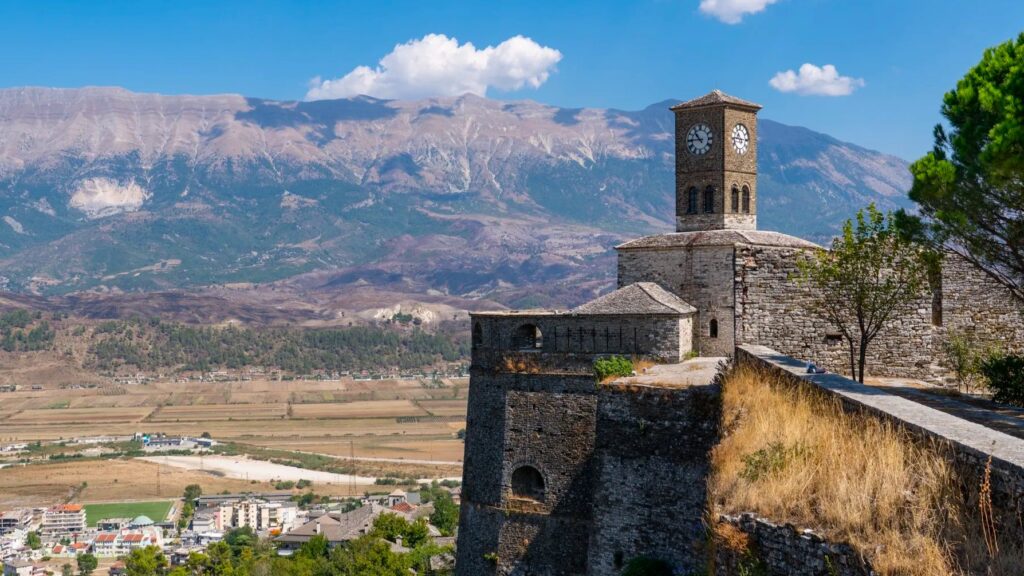
The fortress overlooking the city is one of the largest castles in the Balkans. While the site has medieval origins dating back to at least the 12th century, much of the structure visible today was shaped during the late Ottoman period, particularly in the early 19th century under the rule of Ali Pasha of Tepelenë.
The castle walls stretch for hundreds of meters and offer panoramic views over the old town and the Drino Valley. Inside the complex are open courtyards, defensive towers, and exhibition spaces.
The castle has served multiple roles over time, including as a military stronghold and, during the 20th century, as a prison under different political regimes.
Cold War Tunnel
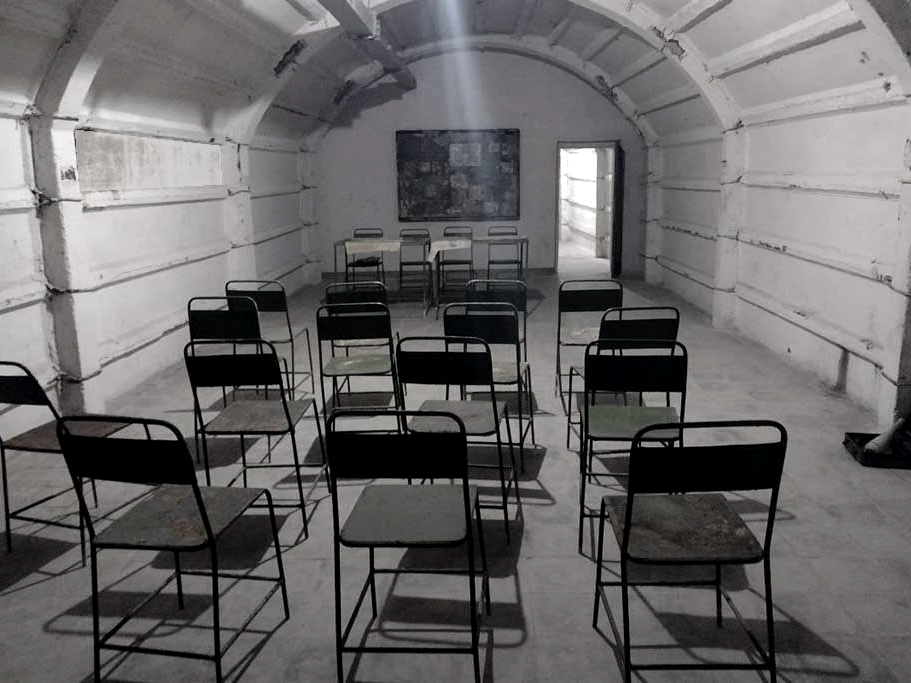
Beneath the castle lies a Cold War-era underground bunker constructed during Albania’s communist period. The tunnel consists of dozens of rooms and corridors designed for civil defense purposes. It remained largely unknown to the public until the early 1990s and today can be visited on guided tours. Unlike similar sites in Tirana, it has undergone minimal renovation, preserving its original atmosphere.
Practical notes:
- Opening hours and ticket prices vary seasonally.
- Entry fees for the castle, tunnel, and house museums are generally modest and should be treated as approximate rather than fixed.
- Allow at least two hours to explore the castle and bunker together.
Ottoman Tower Houses
Gjirokastër is famous for its fortified Ottoman-era houses, known locally as kullë. Built between the 17th and early 19th centuries by wealthy families, these stone residences combined domestic life with defensive features. Hundreds are protected as cultural monuments, and several are open to visitors.
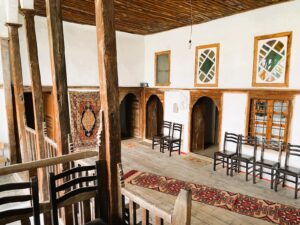
Skenduli House
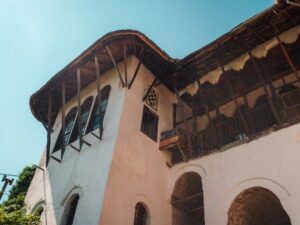
The Skenduli House dates largely to the early 19th century, though the family’s ownership goes back earlier. During the communist period it functioned as an ethnographic museum before being returned to the family after 1991. Today, visits are often led by family members, adding personal context to the experience.
The house includes multiple floors with separate summer and winter living areas, formal guest rooms, and private family quarters. It is known for its carved wooden ceilings, stained-glass windows, and complex internal layout, including concealed storage and passage spaces typical of the era.
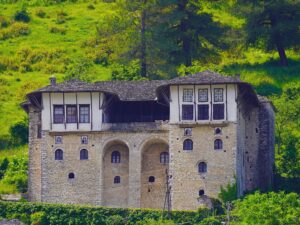
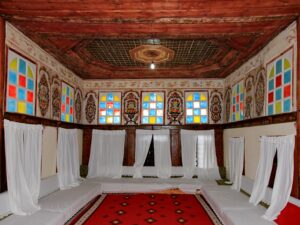
Zekate House
Built between 1811 and 1812 for Beqir Zeko, a local administrator during the time of Ali Pasha, Zekate House is the largest and most imposing residence in Gjirokastër. Its twin towers, elevated position, and richly decorated interior reflect both wealth and defensive concerns.
The main reception room features painted floral motifs, colored window glass, and views toward the castle and valley. Many original wooden elements, including ceilings and staircases, remain intact.
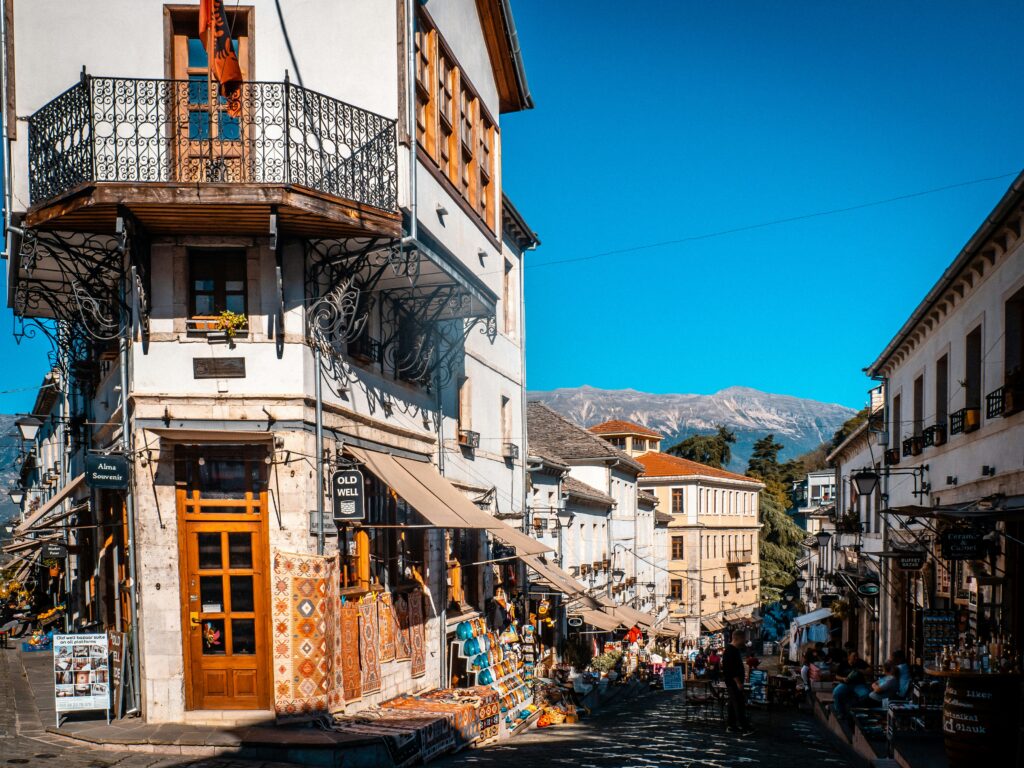
The Old Bazaar
The historic bazaar, centered around Qafa e Pazarit, remains the social and commercial heart of the old town. Stone-built shopfronts house cafés, craft stores, and small businesses. While tourism has increased, the area still functions as a working neighborhood.
Early mornings are the quietest and most atmospheric time to explore, before day visitors arrive.
Ali Pasha Bridge
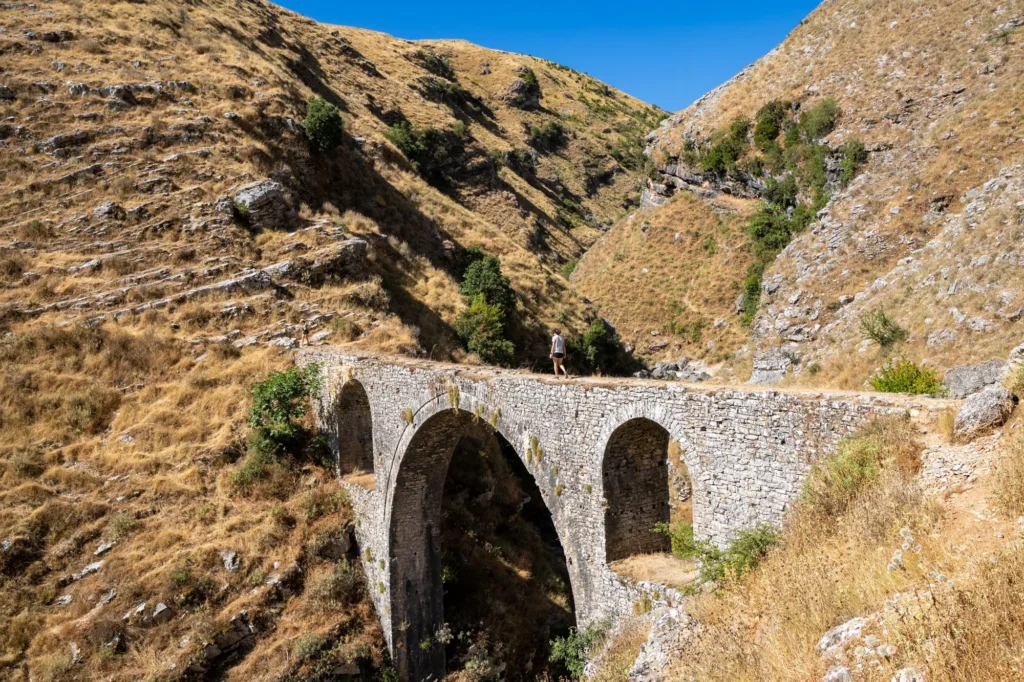
A short walk from the old town leads to the remains of an Ottoman-era aqueduct commonly referred to as the Ali Pasha Bridge. This surviving stone arch once formed part of a larger water supply system serving the castle. Today it is a popular walking route and viewpoint rather than a restored monument.
Visitors can walk below and across the structure via informal paths. The area is best explored in dry weather and with sturdy footwear.


Food in Gjirokastër
Local cuisine reflects the region’s mountainous character. Common dishes include qifqi (rice balls with herbs), lamb baked with yogurt, vegetable-based pies, and slow-cooked meat dishes. Many restaurants offer mixed platters that allow visitors to sample several traditional foods at once.
Both the old town and the newer lower city have good dining options, with the latter often offering better value.
Where to Stay
Accommodation ranges from hostels and family-run guesthouses in historic houses to boutique hotels and resorts outside the city center. Staying in or near the old town allows easy access to main sights, though the terrain is steep.
When to Visit Gjirokastër
Best periods: Late spring (May to early June) and early autumn (September to mid-October).
These months offer mild temperatures suitable for walking and sightseeing. Summers can be very hot, especially in the old town where stone streets and buildings retain heat throughout the day. Winters are quiet and cold, with fewer visitors and reduced restaurant options, though major sights remain open.
Getting to Gjirokastër
Gjirokastër is well connected by road to other parts of Albania, though schedules and fares change frequently.
From Tirana: Buses and minibuses depart daily from the Regional Bus Terminal. The journey usually takes around 4 hours, depending on traffic and route. Morning departures tend to be the most reliable.
From Sarandë: Regular buses and minibuses run throughout the day, with travel time of about 1 to 1.5 hours. Some services pass near the Blue Eye spring, making it possible to combine visits.
From Berat: Direct services typically operate once or twice daily, with a journey time of roughly 3 hours. Departure times should always be confirmed locally.
By car: Driving allows flexibility and scenic views through the Drino Valley. Roads are generally paved but can be narrow and winding in mountain sections.
Buses arrive at the lower bus station, about a 25-minute uphill walk from the old town. Taxis are readily available and commonly used for this final stretch.
Practical Tips
- Expect steep, uneven cobblestone streets. Good footwear is essential.
- Cash is widely used, though ATMs are available in the lower town.
- English is commonly spoken among younger residents.
- Two nights is a reasonable minimum stay. Three nights allows a more relaxed pace.
Gjirokastër is not a quick-stop destination. It rewards slow exploration and curiosity, offering insight into Albania’s history through lived-in architecture and daily routines rather than staged attractions. As tourism in Albania continues to grow, Gjirokastër remains a place where heritage and everyday life still coexist naturally.