1. Valbona to Theth: The Classic Alpine Crossing
Distance: ~14 km one way
Elevation gain: ~1,000 m
Duration: 7 to 9 hours
Difficulty: Moderate to Strenuous
Season: May to October
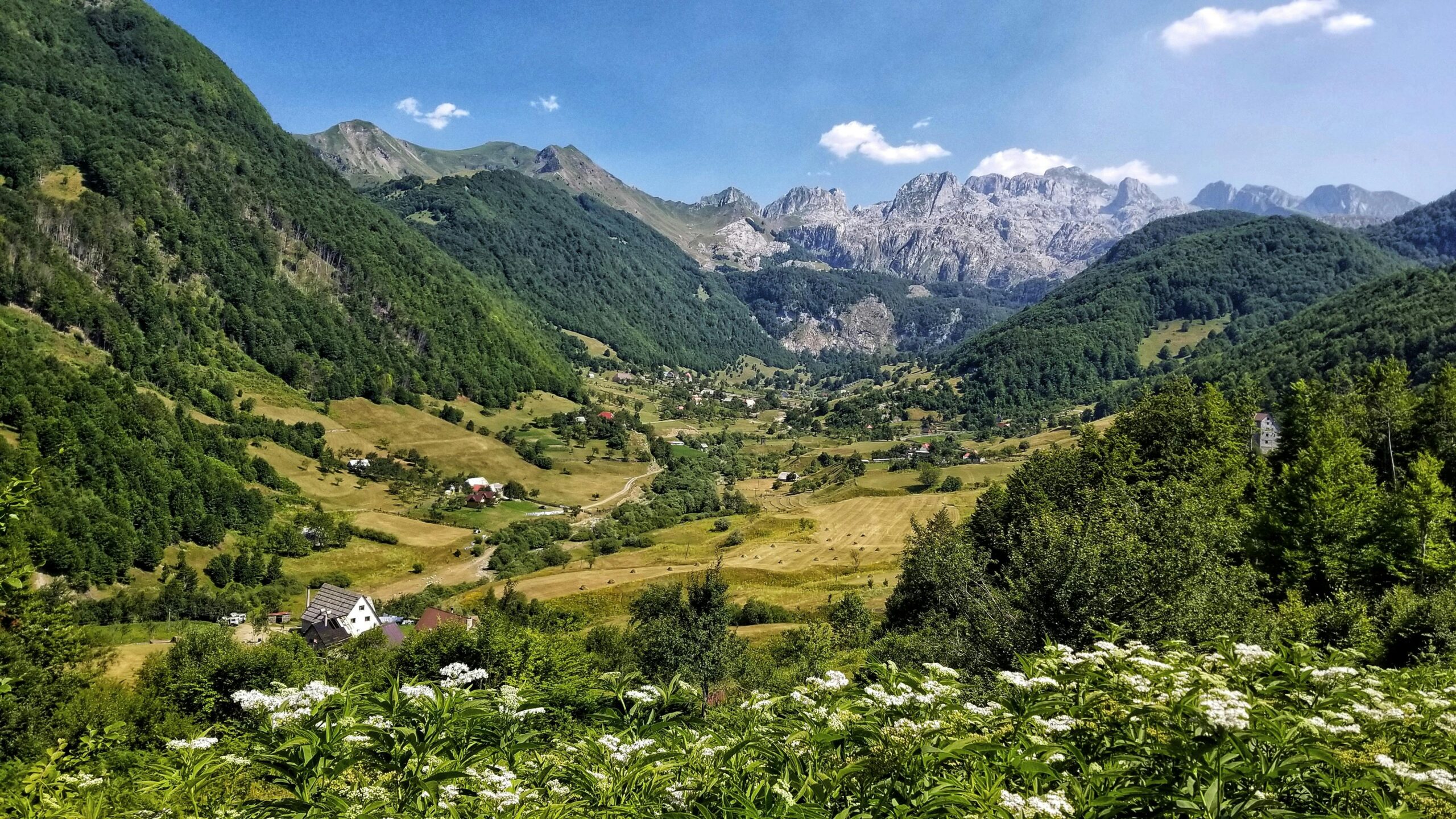
The trek between Theth and Valbona is the defining hike of northern Albania. An ancient mule trail crossing the Valbona Pass at around 1,795 m, it climbs through riverbed terrain, beech forest, and wildflower meadows before opening up to panoramic views stretching into Kosovo and Montenegro. The descent into Valbona valley in late afternoon light is one of the finest mountain finishes in the Balkans.
Most hikers start in Theth (steeper climb, gradual descent), though Valbona to Theth is equally popular. Both directions are well-marked with red and white blazes. Download an offline map on AllTrails before you lose signal. The classic approach to Valbona is via the scenic Koman Lake ferry, one of the most beautiful boat journeys in Europe. Guesthouses in both villages charge roughly 20 to 40 EUR per person with dinner and breakfast. Cash only.
This crossing is Day 4 of our Hike the Albanian Alps signature tour, with all transport, accommodation, and guide logistics included from Tirana.
2. Blue Eye of Theth and Grunas Waterfall
Blue Eye: ~10 km return | ~400 m gain | 4 to 5 hours | Moderate
Grunas Waterfall loop: ~10 km | ~600 m gain | 5 to 6 hours | Moderate
Season: May to October
These are the best day walks from Theth and the ideal introduction for hikers not attempting the full Valbona crossing.
The Blue Eye (Syri i Kalter) is a natural spring whose turquoise intensity looks impossible to be real. The pool sits around 5 metres deep and stays at 8 to 12 degrees Celsius even in August. A 4×4 transfer from Theth to the hamlet of Nderlysa cuts the walking to 4 to 5 km each way if you prefer a shorter approach. The Grunas Waterfall, a 25 to 30 metre cascade and official Albanian Natural Monument, is reached via a loop trail through Theth Canyon with outstanding mountain views throughout.
Both hikes are dedicated full days in our Northern Albania: Culture, Nature and Alpine Trails tour (Days 3 and 4).
Explore Northern Albania with Local Experts
Small groups. Family guesthouses. All logistics handled from Tirana.
3. Peja Pass
Distance: 14 to 16 km one way
Elevation gain: ~1,200 m
Duration: 7 to 8 hours
Difficulty: Strenuous
Season: June to September
The Peja Pass is one of the least-known yet most rewarding hikes in the Albanian Alps. The trail winds through dense forest before opening onto alpine meadows and long ridgelines with unobstructed views in every direction. With 1,200 m of elevation gain and sections of exposed terrain, this is a serious full-day undertaking best done with a local guide. It forms Day 3 of our Hike the Albanian Alps tour, where it is paired with cultural context on the traditional Geg mountain communities of this region.
4. Peaks of the Balkans Trail
Distance: 192 km circuit
Duration: 9 to 12 days
Altitude range: 670 to 2,300 m
Difficulty: Moderate to Strenuous
Season: June to September
Cross-border permit required
For experienced long-distance hikers, the Peaks of the Balkans Trail is the standout multi-day route in the western Balkans. This 192 km circuit crosses Albania, Kosovo, and Montenegro over 10 stages, established in 2012 with support from GIZ. It links remote highland communities, high alpine passes, and dramatic canyon landscapes through terrain that receives a fraction of the traffic of comparable routes in Western Europe.
Starting from Theth, the trail crosses into Kosovo at Mount Trekufiri (2,366 m), the tri-border point where all three countries meet, then descends into Kosovo’s Rugova Canyon before looping through Montenegro and back into Albania. Each day covers 14 to 22 km with 600 to 1,000 m of climbing. Accommodation is in family guesthouses with full board.
All hikers need a cross-border permit before departure. Albanian and Kosovan permits are free and issued electronically; the Montenegrin permit involves a small bank fee. Apply at least four weeks in advance at peaksofthebalkans.info. For a shorter version, the Albanian stages from Theth to Valbona and Dobërdol deliver the most dramatic scenery in 4 to 5 days. Contact us to discuss a custom itinerary.
Best Time to Hike in Northern Albania
May to June: Wildflowers, vivid green valleys, quiet trails. Snow above 1,800 m until late May. Variable weather, outstanding light.
July to August: Peak season. Reliable sunshine, all guesthouses open. Book accommodation weeks ahead. Start hikes early to beat midday heat.
September: The best month. Crowds thin, temperatures settle at 15 to 22 degrees Celsius, beech forests turn gold. Most experienced hikers prefer it.
October: Crisp, colourful, nearly empty. Higher passes may see early snow. Most guesthouses close by end of month.
For planning across all of Albania, see the RakiYa When to Travel guide.
What to Pack
Sturdy hiking boots with ankle support are non-negotiable on the Valbona to Theth crossing and Peja Pass. Pack a fleece and waterproof jacket regardless of the season as altitude temperatures drop quickly. Carry 2 to 3 litres of water (natural springs on the trails are safe). Download offline maps before losing signal. Bring Albanian Lek in cash: there are no ATMs in any mountain village and card payments are not accepted.
Frequently Asked Questions
Do I need a guide for hiking in Northern Albania?
The Valbona to Theth trail, Blue Eye, and Grunas Waterfall are manageable independently. The Peja Pass and Peaks of the Balkans are best done with a local expert guide who knows the terrain and can add cultural context.
How fit do I need to be?
The Blue Eye and Grunas Waterfall require only basic fitness. The Valbona to Theth crossing needs the ability to walk 7 to 9 hours with 1,000 m of elevation gain. The Peja Pass and Peaks of the Balkans require solid hiking fitness and prior mountain experience.
Is it safe to hike alone in Northern Albania?
Albania has a low crime rate and the mountain communities are among the most welcoming in the Balkans. The main risks are those of any remote alpine environment: weather changes, navigation, and dehydration. Read our full guide: Is Albania Safe for Travellers?
What currency do I need in the mountains?
Albanian Lek (ALL) only. Withdraw cash in Shkodër before heading north. No ATMs exist in Theth, Valbona, or any mountain village.
Can I combine hiking with other parts of Albania?
Yes. A popular circuit starts in Tirana, heads north to Shkodër and Krujë, continues into the Alps for the hiking segment, then returns via the Koman Lake ferry. See our Albania destination page for full trip options.
Ready to Hike the Albanian Alps?
RakiYa Travel organises small-group and private hiking tours in Northern Albania. From the Valbona to Theth crossing to the Peaks of the Balkans circuit, we handle every detail.